demo-attachment-144-flower-shop-business-owner-working-service-PSEGWHL

What Is a Fragrance Family? A Complete Guide to Finding Your Perfect Scent

Introduction

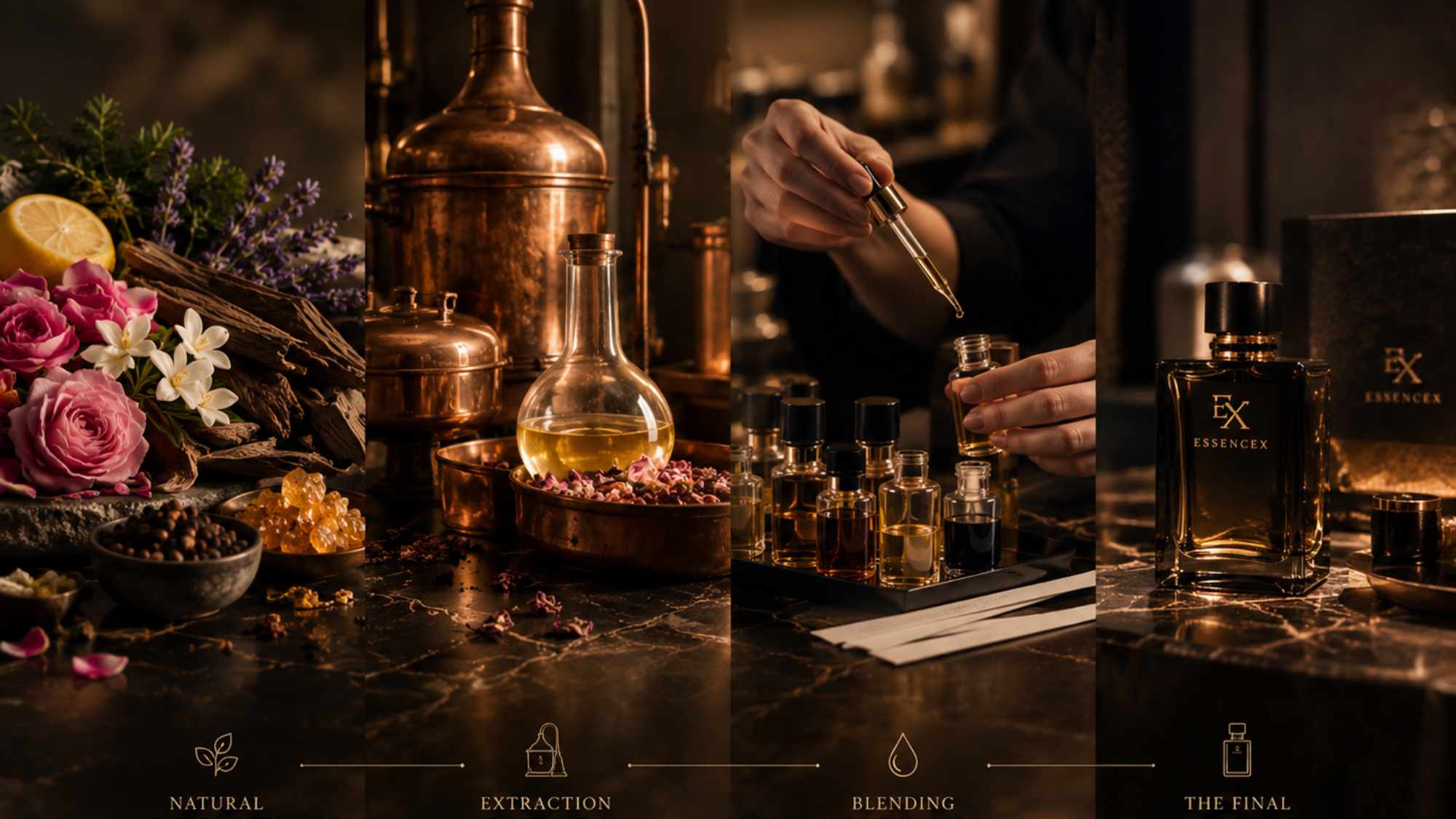
Every bottle of luxury perfume tells a story. Before it reaches your hands, it has traveled a remarkable journey—one that begins in nature and ends as a masterpiece of craftsmanship.

Creating a fine fragrance is far more than mixing pleasant aromas. It is a meticulous process that combines creativity, science, artistry, and patience. Perfumers carefully select exceptional ingredients, refine countless formulations, and allow each composition to mature until every note is perfectly balanced.

In this guide, we explore the fascinating journey of a luxury perfume, from the harvest of precious raw materials to the elegant bottle displayed on your dressing table.

Step 1: Inspiration – The Birth of an Idea

Every exceptional fragrance begins with inspiration.

A perfumer may draw ideas from:

  • A blooming rose garden at dawn
  • The warmth of desert sands
  • Rain falling in an ancient forest
  • Precious memories and emotions
  • Architecture, fashion, or travel
  • Changing seasons
  • Art, music, and culture

Luxury perfumes are designed to tell stories rather than simply smell pleasant. The goal is to capture an emotion that the wearer can experience every time the fragrance is worn.

Step 2: Sourcing Premium Ingredients

The quality of a perfume begins with the quality of its ingredients.

Luxury fragrance houses source raw materials from renowned regions around the world.

Turkish Rose

Celebrated for its rich, velvety aroma and romantic elegance.

Jasmine

Handpicked blossoms prized for their luminous floral richness.

Bergamot

A vibrant citrus fruit that adds freshness and sparkle.

Sandalwood

Creamy and smooth, providing warmth and depth.

Oud

One of the world’s most precious fragrance materials, valued for its smoky, woody richness.

Vanilla

Warm and comforting, adding softness and balance.

Amber

A luxurious accord that creates depth, elegance, and exceptional longevity.

The selection process is rigorous, ensuring every ingredient meets the highest standards of quality.

Step 3: Extracting the Fragrance

Once the raw materials are collected, their aromatic essence must be extracted.

Different ingredients require different methods to preserve their natural beauty.

Steam Distillation

Steam passes through flowers, herbs, or woods to capture their aromatic oils.

Best suited for:

  • Lavender
  • Rosemary
  • Cedarwood
  • Sandalwood

Cold Pressing

Used mainly for citrus fruits.

The peel is gently pressed to release fragrant oils while maintaining freshness.

Common examples include:

  • Bergamot
  • Lemon
  • Orange
  • Grapefruit

Solvent Extraction

Delicate flowers that cannot withstand heat are processed using gentle solvents to preserve their complex aromas.

Often used for:

  • Jasmine
  • Tuberose
  • White Flowers

CO₂ Extraction

One of the most advanced extraction methods.

Carbon dioxide is used under pressure to obtain exceptionally pure aromatic extracts while preserving the ingredient’s natural character.

Step 4: Creating the Formula

This is where science meets creativity.

A perfumer carefully blends hundreds of natural and aroma molecules, testing different proportions until the fragrance feels balanced and harmonious.

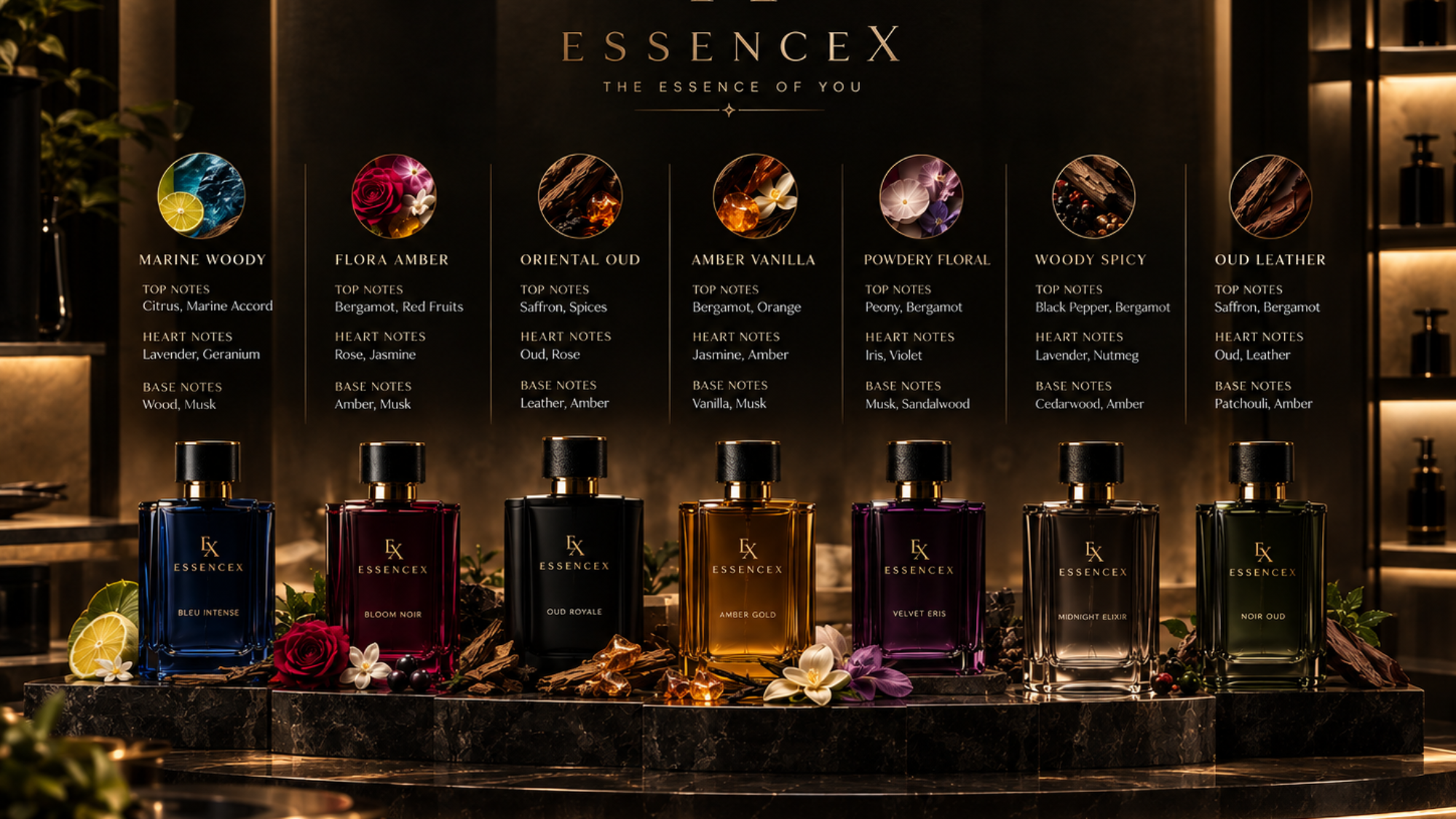
The composition is structured around three layers:

Top Notes

The first impression—fresh, bright, and uplifting.

Heart Notes

The soul of the fragrance—rich, expressive, and elegant.

Base Notes

The lasting signature—deep, warm, and memorable.

Even a tiny adjustment to one ingredient can completely transform the final fragrance.

Step 5: Blending with Alcohol

After the fragrance concentrate is perfected, it is blended with high-quality perfumer’s alcohol.

The concentration determines the type of fragrance.

Step 6: Maturation (Maceration)

One of the most important stages in luxury perfumery is maceration.

During this process, the blended fragrance is left to rest in controlled conditions for several weeks—or even months.

This allows the ingredients to meld together naturally, resulting in:

  • Greater smoothness
  • Enhanced depth
  • Improved harmony
  • Better longevity
  • A more refined scent evolution

Much like a fine wine, a perfume develops greater character with time.

Step 7: Filtration

After maturation, the fragrance is carefully filtered.

This removes any tiny particles or impurities that may have formed during aging, ensuring the perfume remains crystal clear and visually elegant.

Step 8: Bottling

The fragrance is then filled into its signature bottle.

Luxury perfume bottles are designed with precision and attention to detail.

Features often include:

  • Thick premium glass
  • Elegant metallic accents
  • Precision spray mechanisms
  • Sophisticated caps
  • Minimal yet timeless design

The bottle is not just packaging—it is an extension of the fragrance’s identity.

Step 9: Quality Testing

Before reaching customers, every luxury perfume undergoes extensive quality checks.

Specialists evaluate:

  • Scent consistency
  • Longevity
  • Projection
  • Color and clarity
  • Bottle finish
  • Spray performance
  • Packaging quality
  • Stability under different temperatures

Only fragrances that meet exacting standards are approved for release.

Why Luxury Perfume Production Takes Time

Creating a premium fragrance cannot be rushed.

Every stage—from sourcing ingredients to maturation and quality testing—requires patience and precision.

This careful process ensures that every bottle delivers:

  • A balanced scent journey
  • Superior longevity
  • Exceptional craftsmanship
  • Consistent quality
  • A luxurious wearing experience

The Role of the Perfumer

Perfumers, often referred to as “noses,” combine technical expertise with artistic vision.

Their responsibilities include:

  • Understanding hundreds of fragrance materials
  • Balancing complex formulas
  • Creating emotional experiences through scent
  • Refining compositions through repeated testing
  • Maintaining consistency across production batches

Their work is a blend of chemistry, creativity, and intuition.

Sustainability in Modern Perfumery

Today’s luxury fragrance houses increasingly focus on responsible practices.

These may include:

  • Ethically sourced ingredients
  • Sustainable farming partnerships
  • Recyclable packaging
  • Reduced environmental impact
  • Cruelty-free development where applicable
  • Responsible use of natural resources

Luxury and sustainability can coexist, creating fragrances that are both beautiful and mindful.

Frequently Asked Questions

How long does it take to create a luxury perfume?

The process can take several months or even years, from the initial concept to the finished product, depending on the complexity of the fragrance.

Are all perfume ingredients natural?

Not always. Many fine fragrances combine natural ingredients with carefully selected aroma molecules to achieve balance, stability, and creativity.

Why are some perfume ingredients so expensive?

Certain materials, such as oud, jasmine, and rose, require extensive cultivation, careful harvesting, or are naturally rare, making them highly valued in perfumery.

What is maceration?

Maceration is the resting period after blending, allowing the fragrance ingredients to integrate and develop a smoother, more harmonious scent.

Why is the bottle design important?

The bottle reflects the perfume’s identity and enhances the overall luxury experience, combining aesthetics with functionality.

Conclusion

Behind every luxury perfume lies a remarkable journey of inspiration, craftsmanship, and dedication. From carefully sourced ingredients and artistic formulation to patient maturation and elegant presentation, each stage contributes to a fragrance that is far more than a scent—it is an experience.

The next time you hold a bottle of fine perfume, remember the artistry and expertise that brought it to life. Every spray carries with it the passion of countless hands and the timeless pursuit of beauty.

Suggested Internal Links

  • The Art of Luxury Perfumery: From Inspiration to Bottle
  • Understanding Fragrance Notes: Top, Heart & Base Notes Explained
  • What Is a Fragrance Family? A Complete Guide
  • Why Premium Ingredients Define Luxury Fragrances
  • Explore Our Signature Collection

Call to Action

Every fragrance in our collection is crafted with precision, inspired by emotion, and refined through time. Explore our luxury perfumes and discover the artistry behind every bottle—a scent created not just to be worn, but to be remembered.
demo-attachment-141-woman-doing-shopping-and-choosing-clothes-in-PDEP6XU

Understanding Fragrance Notes: Top, Heart & Base Notes Explained

Introduction

Have you ever noticed that a perfume smells different a few hours after you apply it? The fresh burst of citrus you experienced in the beginning slowly transforms into delicate florals before settling into warm woods, musk, or amber.

This isn’t a coincidence—it’s the art of fragrance composition. Every well-crafted perfume is designed to unfold in stages, revealing different facets of its personality over time.

Perfumers achieve this evolution through a carefully balanced structure known as the Fragrance Pyramid, made up of Top Notes, Heart Notes, and Base Notes. Understanding these layers helps you appreciate fine perfumery and choose a fragrance that truly complements your personality.

What Are Fragrance Notes?

Fragrance notes are the individual scent components that make up a perfume. Each note evaporates at a different rate, creating a smooth transition from the first spray to the lingering scent that remains on your skin.

Rather than experiencing every ingredient at once, you discover the fragrance gradually—like reading chapters of a captivating story.

Luxury perfumes are composed with exceptional precision so that each stage flows naturally into the next.

The Fragrance Pyramid

Imagine a beautifully constructed pyramid.

At the top are the lightest, most volatile ingredients. In the middle lies the heart of the fragrance. At the base are the richest, longest-lasting notes.

Each layer has its own purpose and contributes to the overall experience.

Top Notes: The First Impression

Top notes are the first aromas you notice immediately after spraying a perfume. They create the initial impression and are designed to be fresh, bright, and inviting.

Although they disappear relatively quickly, they play an important role in capturing your attention.

Common Top Notes

  • Bergamot
  • Lemon
  • Grapefruit
  • Orange
  • Mandarin
  • Mint
  • Pink Pepper
  • Ginger
  • Green Apple

Characteristics

  • Fresh
  • Crisp
  • Sparkling
  • Light
  • Energetic

Typical Duration

Approximately 15–30 minutes, depending on the formulation and skin chemistry.

Why Top Notes Matter

Many people judge a perfume only by its opening. However, this can be misleading.

A luxury fragrance is designed to evolve. The initial citrus burst is merely an introduction—the true character appears as the heart notes begin to emerge.

Patience is essential when testing a perfume.

Heart Notes: The Soul of the Perfume

Once the top notes fade, the heart notes become the dominant part of the fragrance.

Often called the “middle notes,” they define the perfume’s personality and create the emotional connection between the wearer and the scent.

These notes usually last several hours and form the largest portion of the fragrance composition.

Common Heart Notes

  • Turkish Rose
  • Jasmine
  • White Flowers
  • Lavender
  • Orange Blossom
  • Geranium
  • Iris
  • Magnolia
  • Peony
  • Cardamom

Characteristics

  • Elegant
  • Floral
  • Spicy
  • Aromatic
  • Smooth
  • Sophisticated

Typical Duration

Around 2–5 hours, depending on the fragrance concentration.

Why Heart Notes Are Important

If the top notes are the first impression, the heart notes are the conversation that follows.

This stage reveals the perfume’s true identity. It is where emotion, elegance, and individuality come together.

A floral heart may feel romantic and graceful, while spicy or aromatic heart notes can create confidence and warmth.

Base Notes: The Lasting Signature

Base notes appear after the heart begins to soften.

They provide depth, richness, and longevity, leaving the memorable trail that lingers long after the perfume is applied.

Luxury perfumes often invest heavily in high-quality base ingredients because they define the fragrance’s lasting character.

Common Base Notes

  • Oud
  • Sandalwood
  • Amber
  • Musk
  • Vanilla
  • Patchouli
  • Vetiver
  • Cedarwood
  • Tonka Bean
  • Leather

Characteristics

  • Rich
  • Warm
  • Deep
  • Creamy
  • Smoky
  • Sensual
  • Long-lasting

Typical Duration

From 6 hours to well over 24 hours, depending on the perfume and concentration.

Why Base Notes Define Luxury

The finest perfumes are often remembered for their base notes.

A beautifully crafted base creates a smooth, elegant dry-down that remains balanced and refined instead of becoming overly heavy or sharp.

This lingering impression is often what people associate with a person’s signature scent.

How the Notes Work Together

Think of a perfume as a musical performance.

  • Top Notes are the opening melody.
  • Heart Notes are the main composition.
  • Base Notes are the unforgettable finale.

Each stage supports the next, creating harmony rather than competing for attention.

A balanced fragrance ensures that every transition feels seamless and natural.

Fragrance Evolution on the Skin

No two people experience a perfume in exactly the same way.

Several factors influence how a fragrance develops, including:

  • Skin chemistry
  • Body temperature
  • Climate
  • Humidity
  • Skin hydration
  • Diet and lifestyle

This is why a perfume that smells incredible on one person may smell slightly different on another.

Why You Should Never Judge a Perfume Immediately

A common mistake is deciding within the first few minutes whether a perfume is suitable.

To truly understand a fragrance:

  1. Spray it on clean skin.
  2. Avoid rubbing your wrists together, as this can alter the fragrance’s development.
  3. Wait at least 30 minutes for the heart notes to emerge.
  4. Continue wearing it for several hours to experience the base notes.

Only then can you appreciate the complete composition.

Understanding Different Fragrance Families Through Their Notes

The notes used in a perfume determine its fragrance family.

Floral

Dominated by roses, jasmine, peony, iris, and white flowers.

Ideal for those who appreciate elegance and romance.

Woody

Features sandalwood, cedarwood, vetiver, and oud.

Perfect for lovers of depth, warmth, and sophistication.

Fresh

Built around citrus fruits, herbs, aquatic accords, and green notes.

Clean, energetic, and refreshing.

Oriental (Amber)

Composed of amber, vanilla, spices, incense, and resins.

Rich, luxurious, and captivating.

Gourmand

Inspired by edible notes such as vanilla, caramel, chocolate, coffee, and tonka bean.

Warm, comforting, and indulgent.

How to Choose the Right Fragrance Based on Notes

Instead of shopping by brand name alone, pay attention to the notes that consistently appeal to you.

If you enjoy:

  • Fresh mornings → Citrus and aquatic top notes.
  • Romantic evenings → Floral heart notes.
  • Warm elegance → Amber and sandalwood.
  • Bold sophistication → Oud and leather.
  • Cozy comfort → Vanilla and musk.

Over time, you’ll recognise patterns in the scents you naturally gravitate toward.

Frequently Asked Questions

Why do perfumes smell different after a few hours?

Because fragrance notes evaporate at different speeds, allowing new layers to emerge over time.

Which notes last the longest?

Base notes such as oud, sandalwood, amber, vanilla, musk, and patchouli generally provide the greatest longevity.

Why can’t I smell my perfume after some time?

Your nose may become accustomed to your own fragrance, a phenomenon known as olfactory adaptation. Others can often still detect it.

Are stronger perfumes always better?

Not necessarily. A well-balanced fragrance is more enjoyable than one that is simply intense.

Should I buy a perfume based only on its top notes?

No. Always allow the perfume to develop fully before making a decision, as the heart and base notes reveal its true character.

Conclusion

Every luxury perfume tells its story in three elegant acts. The freshness of the top notes captures your attention, the heart notes reveal its true identity, and the base notes leave a lasting impression that becomes part of your personal presence.

Understanding fragrance notes transforms perfume from a simple accessory into an experience. The more you learn about these layers, the more confidently you can discover scents that reflect your style, mood, and individuality.

The next time you sample a fragrance, let it unfold naturally. The most beautiful moments often appear long after the first spray.

Suggested Internal Links

  • The Art of Luxury Perfumery: From Inspiration to Bottle
  • What Is a Fragrance Family? A Complete Guide
  • How to Choose Your Signature Fragrance
  • Why Premium Ingredients Define Luxury Fragrances
  • Explore Our Signature Collection

Call to Action

Explore our collection of expertly crafted fragrances and discover how every note—from the sparkling opening to the unforgettable dry-down—comes together to create a scent that is uniquely yours.

demo-attachment-138-clothes-shop-costume-dress-fashion-store-style-P7HP5QN

What Is a Fragrance Family? A Complete Guide to Finding Your Perfect Scent

Introduction

Choosing a perfume is a deeply personal experience. While beautiful packaging and memorable names may catch your attention, the true essence of a fragrance lies in its fragrance family.

Every perfume belongs to a fragrance family—a category based on its dominant scent characteristics. Understanding these families helps you identify the styles of fragrance you naturally enjoy, making it easier to discover scents that suit your personality, lifestyle, and preferences.

Whether you love the romance of blooming flowers, the richness of oud, the freshness of citrus, or the warmth of vanilla, learning about fragrance families opens the door to a more refined perfume journey.

What Is a Fragrance Family?

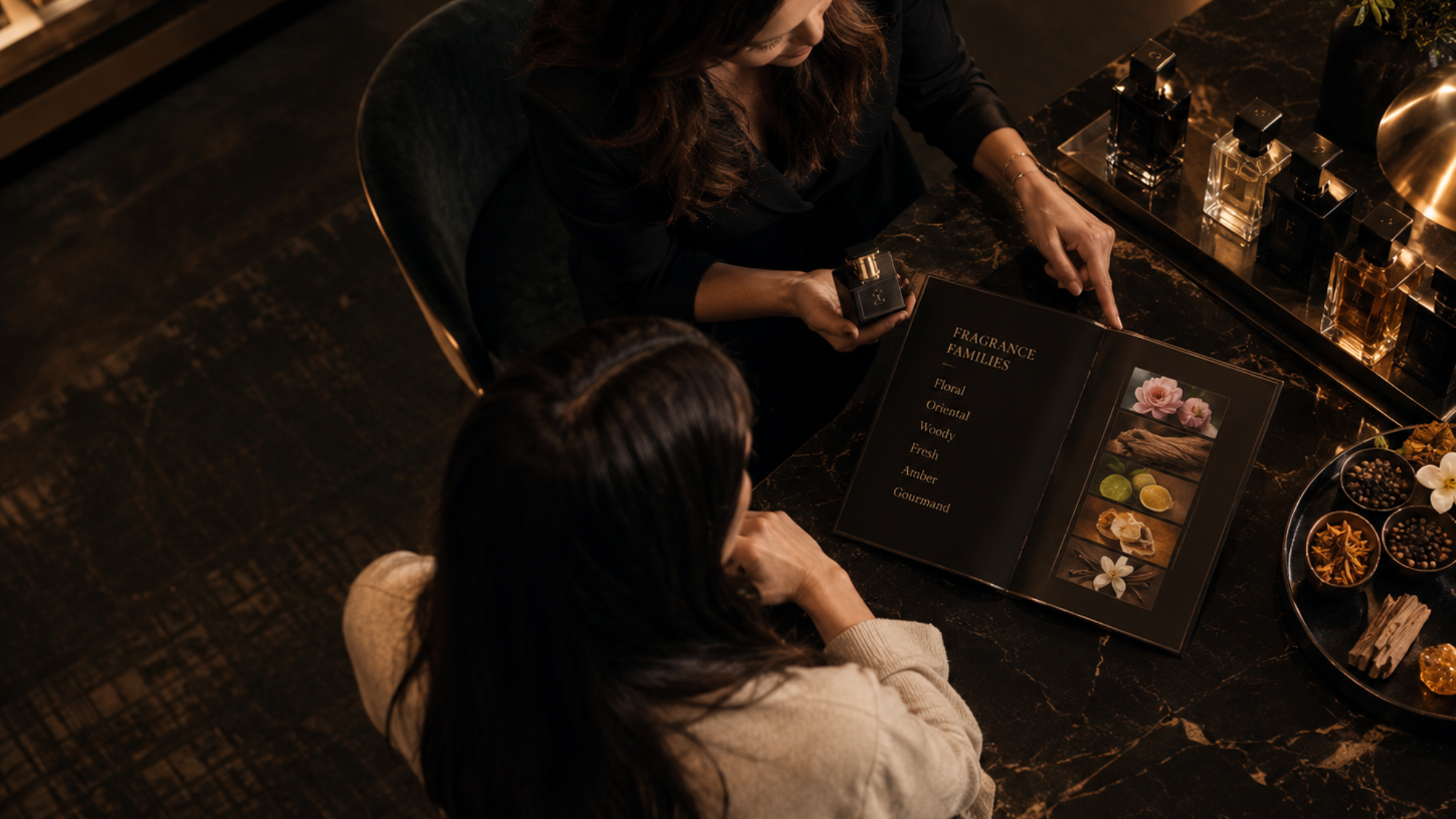
A fragrance family is a way of classifying perfumes based on their overall scent profile.

Instead of focusing on a single ingredient, fragrance families describe the dominant character of the perfume. Most fragrances combine notes from several families, but one usually stands out as the defining identity.

Think of fragrance families as genres in music. Just as someone may enjoy classical, jazz, or rock, perfume lovers often find themselves drawn to particular scent styles.

Why Fragrance Families Matter

Understanding fragrance families helps you:

  • Shop for perfumes with greater confidence.
  • Discover scents that match your personality.
  • Build a versatile fragrance wardrobe.
  • Select perfumes for different occasions.
  • Appreciate the craftsmanship behind fragrance creation.

Rather than relying on trial and error, you’ll begin to recognize patterns in the scents you love.

The Five Main Fragrance Families

1. Floral – Timeless Elegance

Floral fragrances are among the most beloved and versatile in the world of perfumery. Inspired by fresh blossoms, they evoke beauty, romance, and sophistication.

Common Floral Notes

  • Turkish Rose
  • Jasmine
  • White Flowers
  • Orange Blossom
  • Iris
  • Peony
  • Magnolia
  • Lily of the Valley

Personality

Floral fragrances often appeal to those who appreciate elegance, grace, and classic style.

Best For

  • Weddings
  • Romantic evenings
  • Daytime wear
  • Formal occasions
  • Spring and summer

Mood

Soft, feminine, uplifting, and refined.

2. Woody – Depth and Sophistication

Woody fragrances are warm, smooth, and luxurious. Built around precious woods and earthy accords, they create an aura of confidence and refinement.

Common Woody Notes

  • Oud
  • Sandalwood
  • Cedarwood
  • Vetiver
  • Guaiac Wood
  • Oakmoss

Personality

Ideal for individuals who appreciate understated luxury and timeless elegance.

Best For

  • Evening wear
  • Business meetings
  • Formal events
  • Autumn and winter

Mood

Confident, elegant, grounded, and sophisticated.

3. Fresh – Energy and Simplicity

Fresh fragrances are clean, crisp, and invigorating. They often feature citrus fruits, aquatic accords, green notes, and aromatic herbs.

Common Fresh Notes

  • Bergamot
  • Lemon
  • Grapefruit
  • Mandarin
  • Mint
  • Basil
  • Marine Accord
  • Green Tea

Personality

Perfect for those who enjoy a modern, active, and refreshing lifestyle.

Best For

  • Office wear
  • Daily use
  • Summer
  • Casual outings
  • Travel

Mood

Bright, energetic, clean, and refreshing.

4. Oriental (Amber) – Richness and Mystery

Oriental fragrances, often referred to today as Amber fragrances, are opulent and captivating. They combine warm spices, resins, vanilla, amber, and exotic woods to create unforgettable depth.

Common Oriental Notes

  • Amber
  • Vanilla
  • Incense
  • Cinnamon
  • Cardamom
  • Benzoin
  • Tonka Bean
  • Patchouli

Personality

Suited to those who enjoy bold, luxurious, and expressive fragrances.

Best For

  • Evening occasions
  • Celebrations
  • Winter
  • Special events

Mood

Warm, sensual, mysterious, and indulgent.

5. Gourmand – Comfort and Indulgence

Gourmand fragrances are inspired by delicious edible notes. They blend sweetness with sophistication, creating scents that feel comforting yet luxurious.

Common Gourmand Notes

  • Vanilla
  • Caramel
  • Chocolate
  • Coffee
  • Almond
  • Honey
  • Praline
  • Tonka Bean

Personality

Perfect for those who enjoy cozy, inviting, and playful fragrances.

Best For

  • Cooler weather
  • Evening wear
  • Casual luxury
  • Festive occasions

Mood

Comforting, warm, joyful, and irresistible.

Hybrid Fragrances

Many modern luxury perfumes combine multiple fragrance families to create unique compositions.

Examples include:

  • Floral Woody
  • Fresh Woody
  • Floral Amber
  • Citrus Floral
  • Woody Amber
  • Gourmand Amber

These blends allow perfumers to create fragrances with greater complexity and character.

Which Fragrance Family Matches Your Personality?

The Romantic

You appreciate elegance, beauty, and timeless charm.

Recommended Family: Floral

The Adventurer

You enjoy exploration, travel, and the outdoors.

Recommended Family: Fresh

The Sophisticated Professional

You value confidence, refinement, and understated luxury.

Recommended Family: Woody

The Evening Enthusiast

You enjoy glamour, celebrations, and unforgettable impressions.

Recommended Family: Oriental (Amber)

The Comfort Seeker

You appreciate warmth, coziness, and inviting scents.

Recommended Family: Gourmand

Choosing Fragrances for Different Seasons

Spring

  • Floral
  • Fresh Floral
  • Citrus

Summer

  • Fresh
  • Marine
  • Green

Autumn

  • Woody
  • Amber
  • Spicy

Winter

  • Oud
  • Gourmand
  • Amber
  • Leather

Matching your fragrance to the season can enhance both its performance and your overall experience.

Building a Fragrance Wardrobe

Just as you choose different outfits for different occasions, your fragrance collection can include a variety of scent families.

A well-rounded wardrobe might include:

  • A Fresh fragrance for everyday wear.
  • A Floral fragrance for elegant occasions.
  • A Woody fragrance for work and evenings.
  • An Amber fragrance for celebrations.
  • A Gourmand fragrance for cozy moments.

This versatility ensures you always have the perfect scent for any setting.

Tips for Exploring New Fragrance Families

  • Test perfumes on your skin rather than paper strips.
  • Give each fragrance time to develop through its top, heart, and base notes.
  • Sample scents in different weather conditions.
  • Avoid testing too many fragrances at once.
  • Keep a journal of the notes and families you enjoy most.

Over time, you’ll gain a deeper understanding of your personal preferences.

Frequently Asked Questions

Can one perfume belong to more than one fragrance family?

Yes. Many modern fragrances blend multiple families, though one usually remains the dominant character.

Which fragrance family lasts the longest?

Woody and Amber fragrances often have greater longevity due to their rich base notes, while performance also depends on concentration and formulation.

Are floral fragrances only for women?

Not at all. Many contemporary floral compositions are designed as unisex fragrances, balancing floral notes with woods, spices, or citrus.

How do I know which family suits me?

Start by identifying perfumes you’ve enjoyed in the past. Look for recurring notes and dominant scent styles, then explore similar fragrances.

Should I wear the same fragrance every day?

A signature scent is wonderful, but having a small collection for different occasions and seasons can make your fragrance experience even more enjoyable.

Conclusion

Fragrance families are the foundation of perfume appreciation. They simplify the process of discovering scents while revealing the artistry behind every composition.

Whether you find yourself drawn to the elegance of florals, the richness of woods, the freshness of citrus, the allure of amber, or the indulgence of gourmand creations, understanding fragrance families allows you to choose perfumes with confidence and purpose.

Every fragrance tells a story. Finding the family that resonates with you is the first step toward discovering a scent that becomes part of your identity.

Suggested Internal Links

  • The Art of Luxury Perfumery: From Inspiration to Bottle
  • Understanding Fragrance Notes: Top, Heart & Base Notes Explained
  • How to Choose Your Signature Fragrance
  • Why Premium Ingredients Define Luxury Fragrances
  • Explore Our Signature Fragrance Collection

Call to Action

Explore our curated collection of luxury fragrances and discover the fragrance family that reflects your personality. Whether you seek timeless florals, refined woods, refreshing citrus, or warm amber accords, your perfect scent awaits.